
News
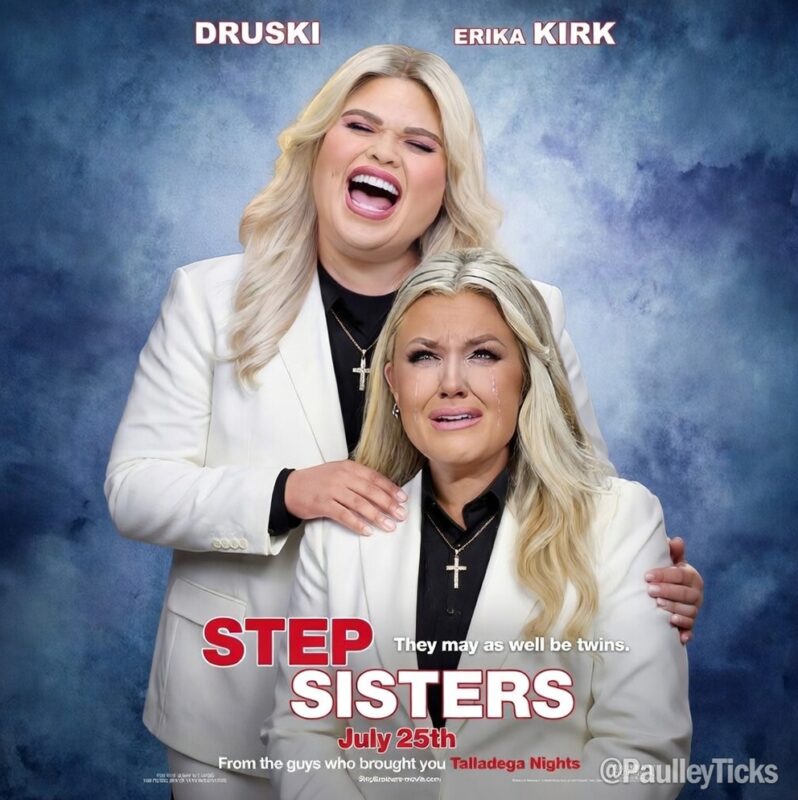
How Conservative Women In America Act Druski Comedian Cosplay Erika Kirk
Mar
Druski’s “Erika Kirk” Sketch Sparks Debate Over Cancel Culture and Comedy in America
Our products for Druski.
Comedian Druski has ignited a heated debate online with his viral sketch, “How Conservative Women in America Act.” The parody, which many viewers link to Erika Kirk, highlights ongoing tensions around cancel culture, satire, and political hypocrisy in the United States.
What Happens in Druski’s Viral Sketch?
In the short skit, Druski appears in full costume, portraying a fictional conservative woman. The video features exaggerated scenarios, including:
- A mock press conference about foreign policy
- A religious testimony segment
- A satirical everyday interaction at a drive-through
The sketch quickly gained millions of views across social media platforms, drawing both praise and backlash.
Why the Controversy Started
Several prominent conservative figures reacted strongly to the video. Politician Ted Cruz criticized it harshly, while commentators like Jon Root and Meghan McCain also condemned the comedian.
Critics labeled the portrayal offensive, with some even describing it as “whiteface.” Ironically, this argument mirrors the same cultural sensitivity framework often criticized by conservatives when used by liberal audiences.
Satire vs. Personal Attack
A key point in the debate is whether Druski’s sketch crosses the line. Supporters argue that:
- The video targets a public persona, not private grief
- Turning Point USA leadership figures are public-facing and open to satire
- The character is not explicitly named, making it broader commentary on conservative culture
Critics, however, believe the resemblance to Erika Kirk makes the parody too personal.
A Broader Pattern: Cancel Culture on Both Sides
This controversy reflects a larger trend in American politics: both conservatives and liberals accuse each other of suppressing humor.
Examples include:
- Stephen Colbert facing backlash during the Trump era
- Kathy Griffin criticized over a controversial photoshoot
- Michelle Wolf drawing outrage after the 2018 White House Correspondents’ Dinner
- Dave Chappelle sparking debate with his Netflix special The Closer
Both sides have, at different times, called for content removal, boycotts, or public apologies.
The Bigger Takeaway
Druski’s sketch underscores a central irony in modern political culture:
each side claims to defend free speech and comedy while criticizing the other for being overly sensitive.
In today’s media landscape, satire remains a powerful — and controversial — tool. Whether audiences see Druski’s performance as sharp comedy or offensive parody often depends more on political perspective than the joke itself.
Conclusion
The debate over Druski’s “Erika Kirk” sketch is less about one video and more about the evolving boundaries of humor in America. As political polarization grows, reactions to satire continue to reveal contradictions on both sides of the cultural divide.
If nothing else, the controversy proves one thing: in modern politics, comedy is never just comedy anymore.
See more news and products at koinastee.com.
